Your Cart is Empty
Free USA Shipping on all orders $99+
Free USA Shipping on all orders $99+


Soft vs hard motorcycle luggage is one of those debates that never really ends, because there is no single best setup. The right call depends on where you ride, how often the bike goes over, whether you leave it parked in town, and how you like to pack.
This guide walks through motorcycle soft luggage and hard panniers side by side, then adds a third option most buying guides skip: a soft-on-hard hybrid. Use the comparison table, pick a path, and then check fitment for your bike.
Turn the bags you already own into real motorcycle luggage. GCAG's modular soft racks and straps fit everything from enduro bikes to big ADV bikes, and they're made in the USA by the riders who invented the soft rack.
| Feature | Soft luggage | Hard panniers | Soft-on-hard hybrid |
|---|---|---|---|
| Best for | Off-road, dual sport, enduro, and BDR-style riding | Highway touring, commuting, and leaving the bike in town | Keep your hard boxes for pavement and security; add soft bags when you need more capacity or a dirt day |
| Weight and handling | Typically lighter, with the load closer to the bike when you use a soft rack or straps | Heavier cases hanging outboard on hard racks | Keep the boxes you already have; add only the extra bags and straps you need |
| Weather | Roll-top dry bags and similar soft bags are a common way to keep gear dry | Lids can look sealed, but hard boxes often aren't truly waterproof — especially once they dent | Use dry bags on or with the hard shells for overflow and weather-sensitive gear |
| Security | Honest trade-off: easier to slash or snatch than a locked case | Lockable lids and frames are the usual reason riders choose hard cases | The hard boxes stay lockable; the soft bags come inside with you |
| Drops and trail abuse | Soft bags flex. Tip-overs are common off-road, and many riders prefer something that gives instead of a rigid box | Hard boxes bend and dent. When they do, they often lose a good seal at the lid | Soft bags take scrapes and extra cargo; the hard cases stay for street days |
| Packing and access | Compress and roll; easy to scale the load up or down | Suitcase-style lids and organized cubbies | Mix: organized base in the boxes, overflow in soft bags |
| Empty space off-road | Soft bags compress around whatever is inside | If the pannier isn't full, gear shakes like dried beans in a can | Pack the boxes full for pavement, or use soft bags that cinch down for dirt |
| Bike fit | A soft rack and straps, or straps straight to solid mount points | Bike-specific hard racks and cases | Chile Tech Pannier Bundle or GCAG Bag Snake Kit on the panniers you already own |
Many riders believe a hard box can hurt more than a soft bag if the bike tips onto a leg — one reason soft luggage is common for technical dirt.
If your days include ruts, rocks, sand, or a backroad that turns into a trail, motorcycle soft luggage is usually the better starting point. Tip-overs are common off-road. A soft bag flexes when the bike goes over. A hard box does not.
That is why a lot of dual-sport, enduro, and adventure riders running technical dirt choose soft bags: they handle scrapes, they don't leave you with a bent lid that no longer seals, and they don't add as much hanging weight when you are already working the bike.
Not sure which setup matches your motorcycle? Start with the Motorcycle Luggage Fitment Guide by Bike.
Hard boxes are heavier. That extra mass usually lives outboard on a metal rack, which you feel more when you tip the bike in or pick it up after a dab.
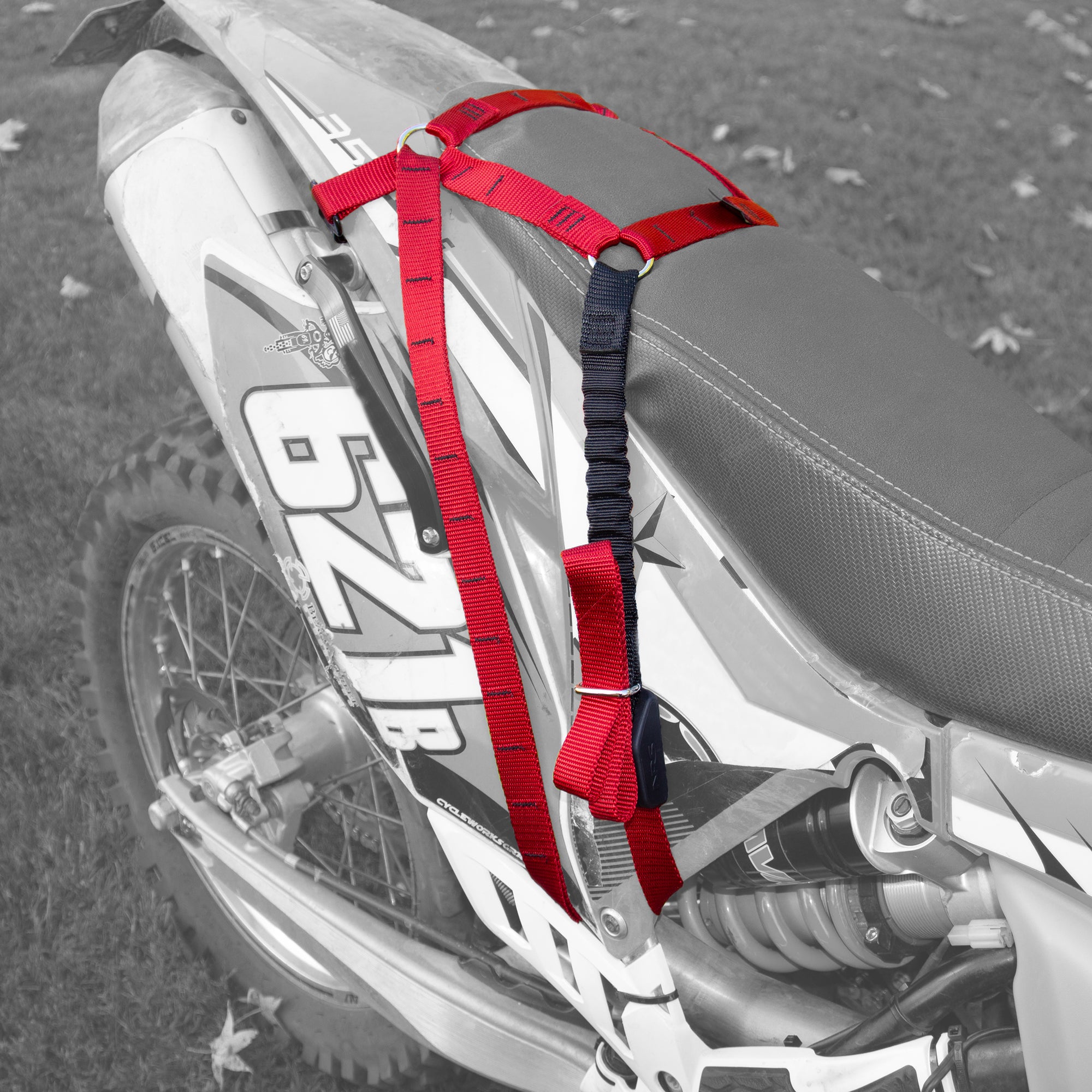
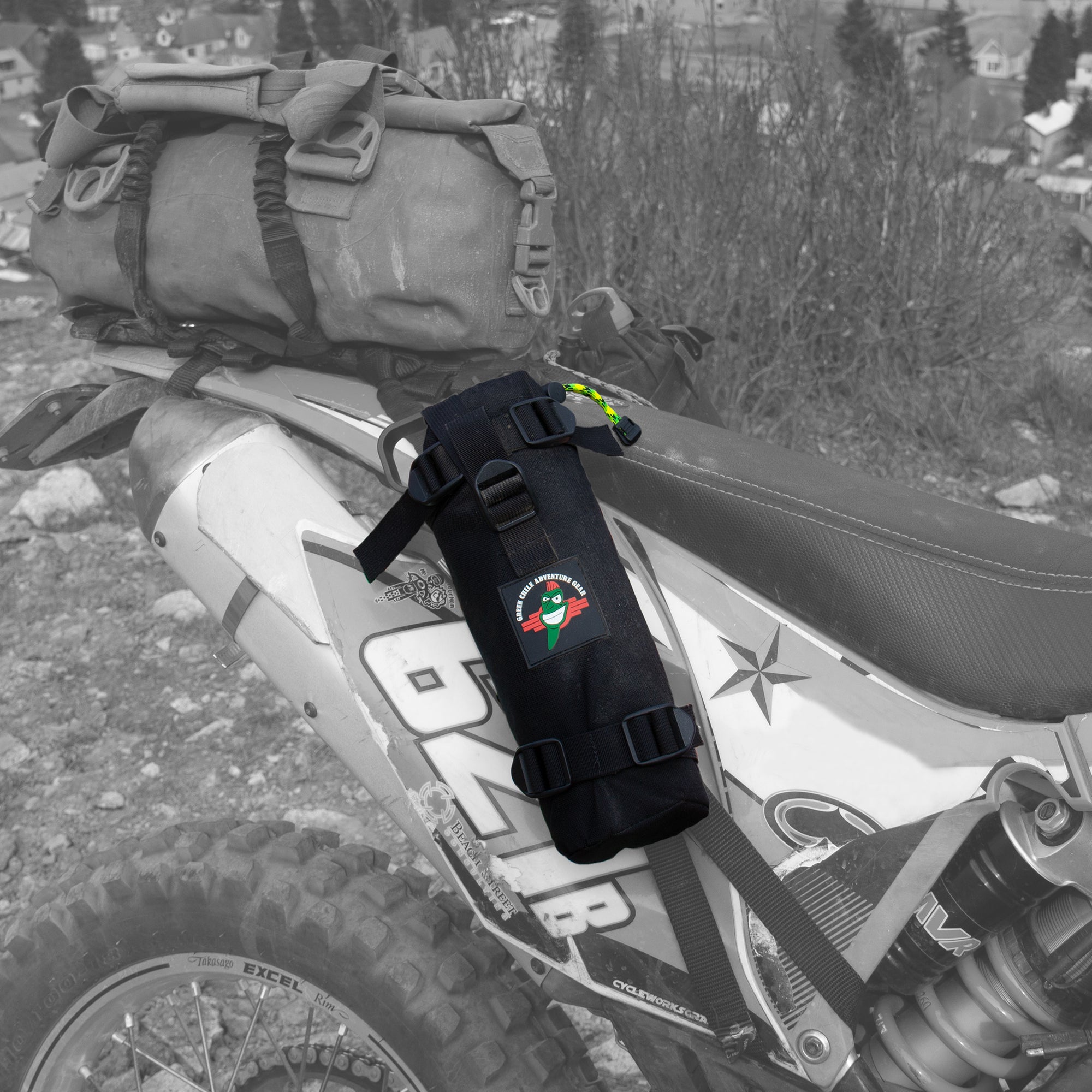
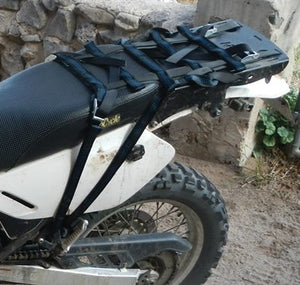
Soft systems are typically lighter. A GCAG Uprising Soft Rack Kit (about 17" x 10", 1.6 lb) or a Hardcore Soft Rack (about 15" x 6", 1.8 lb, with carbon fiber support bars for narrow plastic fenders) gives you a base without a full hard-rack-and-box stack. The Scramble Rack is even more minimal (1 lb) when you mainly want bags on the sides.
We are not quoting hard-pannier pound figures here — those vary by brand and model — but the pattern is consistent: soft luggage is the lighter way to carry camp gear on a dirt-focused bike.
Most soft pannier brands sell you a bag that is also the attachment. GCAG split those jobs. A soft rack adds daisy-loop mount points to the back and sides of the bike. Strap kits then hold whatever bags you already own — dry bags, duffels, or other soft bags.
That is the whole idea behind How Does The Green Chile Luggage System Work?: any bag on any bike, scaled up or down for the day.
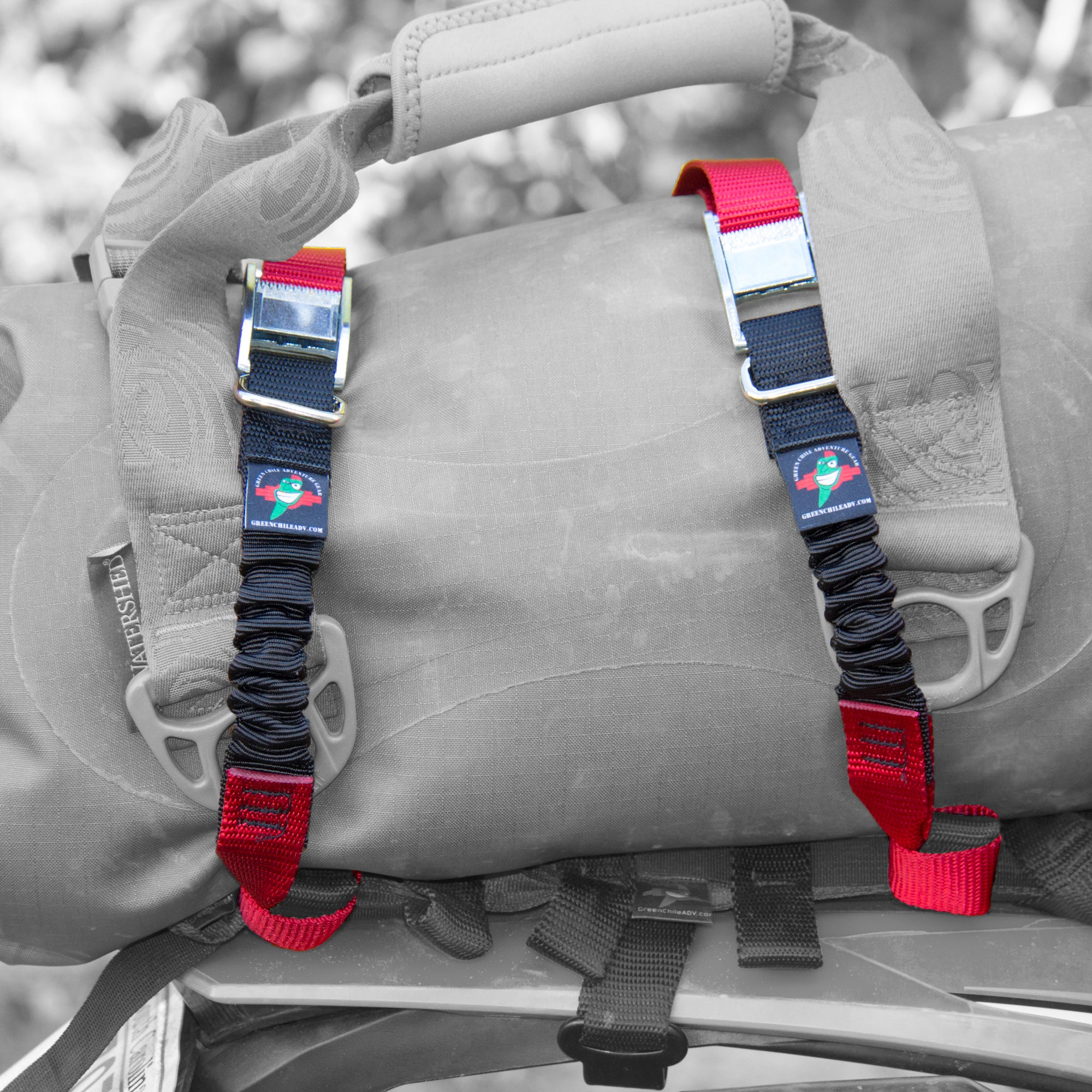
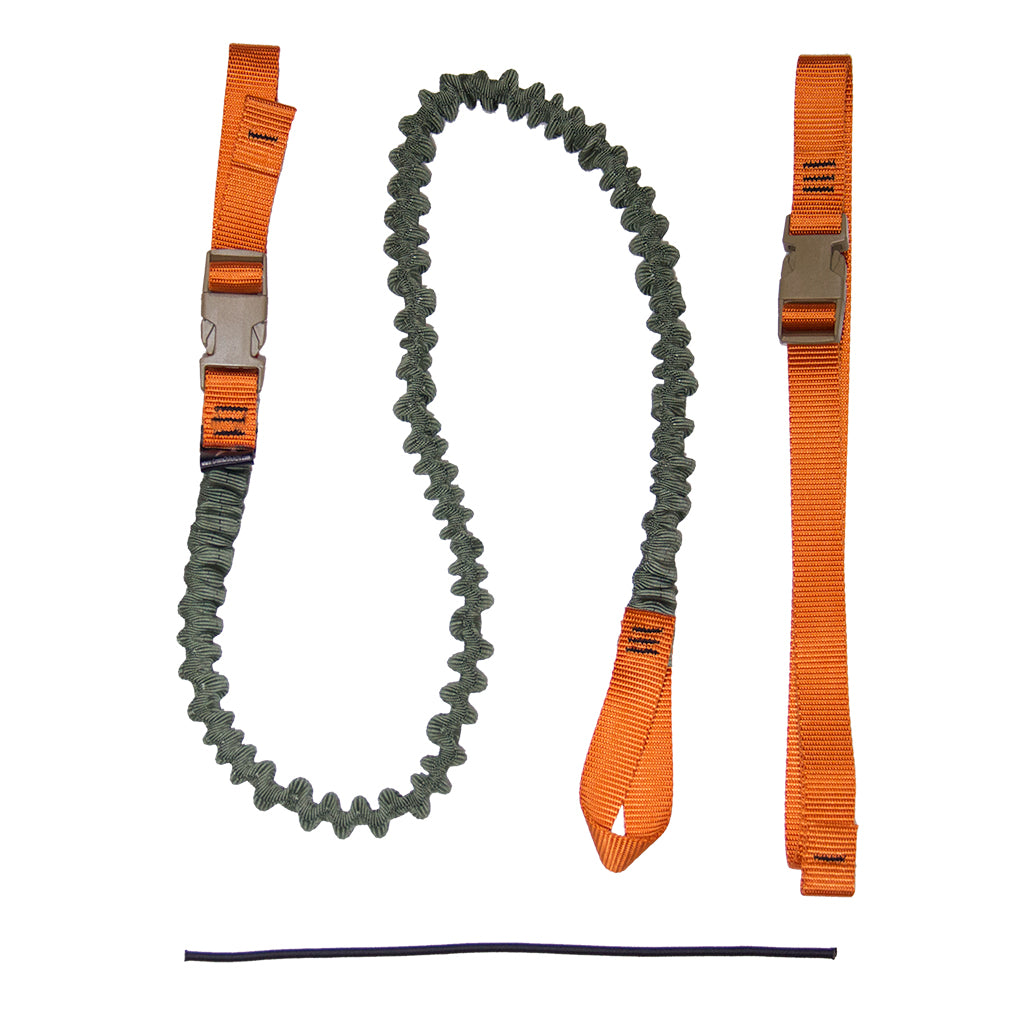
Use the Mondo Straps Kit for top (rear) bags and the GCAG Bag Snake Kit for side bags. One Bag Snake uses a single strap that crosses the bag three times. Its ring tensioner has a double ring that acts as a secondary buckle, so you can loosen the cam to open the bag and the bag stays on the bike. One strap kit secures one bag.
If side bags sit near the muffler, check clearance. Side bag weight can push the side plastics into the muffler, and a bag that touches the muffler can melt. If you need a heat shield, we highly recommend the Chilly Exhaust Heat Shield.
Green Chile Adventure Gear does not sell hard boxes. If lockable, suitcase-style cases are what your riding actually needs, that is a fair choice — and this section is meant to be honest about it.
Hard panniers shine when the day is mostly pavement and you want lids that open like a suitcase. They are convenient for organized packing, and lockable cases are the usual answer if you leave the bike unattended at a hotel, job, or grocery stop.
Some riders also like a flat lid as a makeshift camp table. None of that is what GCAG builds. We are not trying to talk you out of hard luggage when those jobs are the point.
Hard panniers have a few well-known limits once the pavement ends:
Many riders believe a hard box can hurt more than a soft bag if the bike tips onto a leg — one reason soft luggage is common for technical dirt. Hard panniers still make sense for pavement-heavy touring and when you want lockable cases. Pick for how you ride.
You do not have to pick only one forever. Plenty of riders keep hard panniers for pavement days and security, then add soft bags on top for camping overflow, a dirt side trip, or gear they want to carry inside at night.
That hybrid path is where GCAG still helps, even if we do not make the boxes.
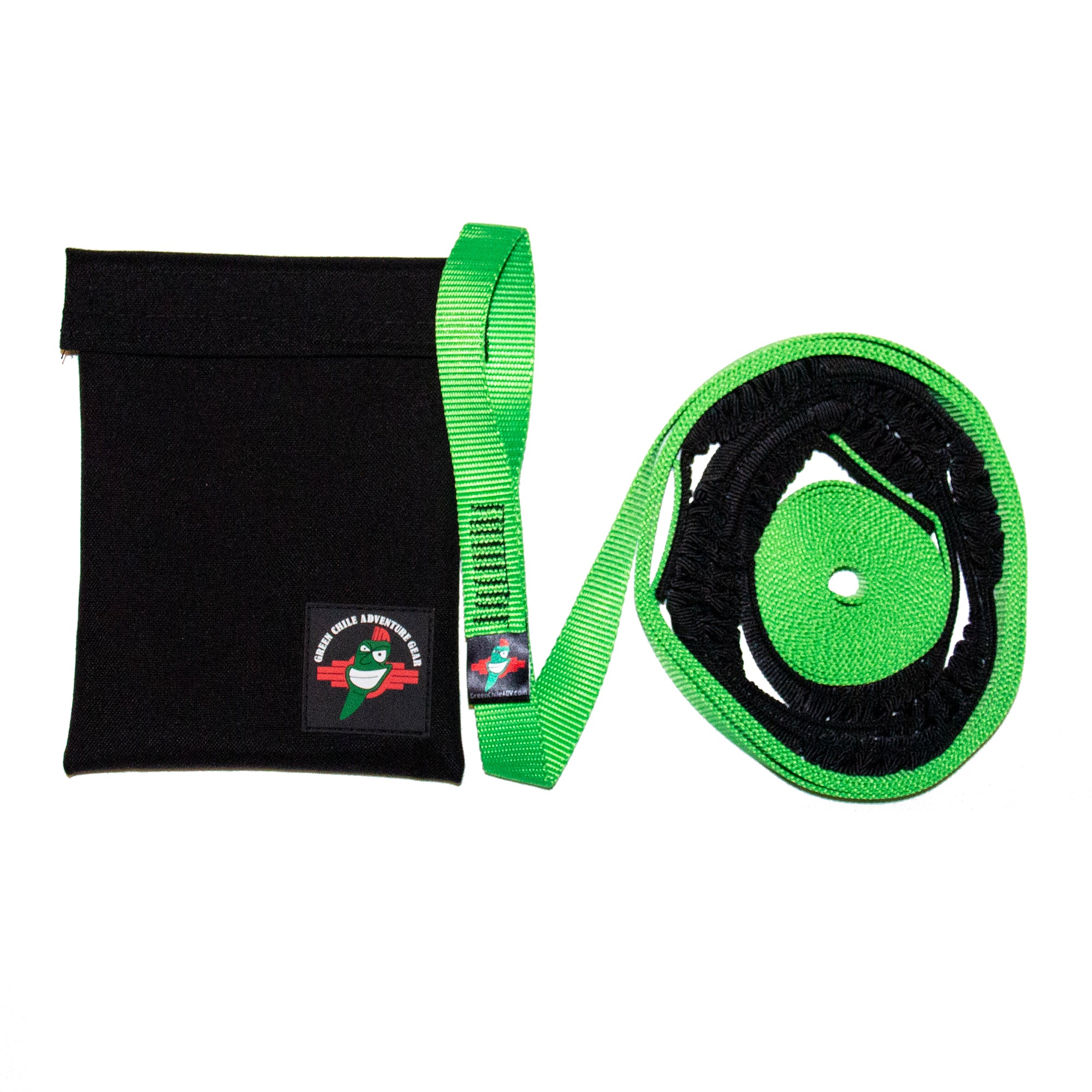
The Chile Tech Pannier Bundle secures bags to your panniers and adds the convenience of a carry handle. It includes two soft pannier handles and two GCAG Bag Snake Kits. Most pannier mount points accept the Bag Snake. Some boxes have low-clearance brackets; an optional set of eight low-profile ring loops covers those.
A GCAG Bag Snake Kit on its own is also a straightforward way to lash a dry bag or duffel on top of a pannier or to a rear rack. One kit holds one bag, and that single strap crosses the bag three times.
If you want a closer look at top-bag straps — including when a lighter buckle setup is enough — read ROK Straps vs. Mondo UL: How They're Built and Which One to Choose.
Neither is better for every rider. Soft luggage is usually the better fit for off-road, dual sport, enduro, and BDR-style riding, where tip-overs are common and extra weight works against you. Hard panniers make more sense for pavement-heavy touring, commuting, and leaving the bike in town with lockable cases. If you do both, a soft-on-hard hybrid lets you keep the boxes and add bags when you need them. Use the comparison table above as the short version.
Yes. A lot of adventure and dual-sport riders use motorcycle soft luggage on dirt-heavy routes because it is lighter, it flexes in a tip-over, and it does not dent into a leaky lid. Pair a GCAG soft rack with strap kits and the bags you already own, or start with a bundle that includes 20L Explorer Dry Bags. Check the Motorcycle Luggage Fitment Guide by Bike for your model.
Choose hard panniers when most of your miles are pavement, you want suitcase-style packing, or you regularly leave the bike unattended and want lockable cases. Be honest about the trade-offs off-road: they are heavier, they dent, they often are not truly waterproof, and a partly empty box will rattle your gear.
Yes. That is the soft-on-hard hybrid. The Chile Tech Pannier Bundle pairs two GCAG Bag Snake Kits with two soft pannier handles so you can strap a dry bag or duffel on top of your panniers and have a convenient carry handle. Most pannier mount points accept the Bag Snake; low-profile ring loops are an option for boxes with low-clearance brackets.
GCAG separates the attachment from the bag. A soft rack adds mount points to the bike, and strap kits hold dry bags, duffels, or other soft bags you already own. You are not locked into one branded set of panniers. Green Chile Adventure Gear invented the soft rack, and the same modular pieces can go from a day ride to a multi-day trip. For the walkthrough, see How Does The Green Chile Luggage System Work?.
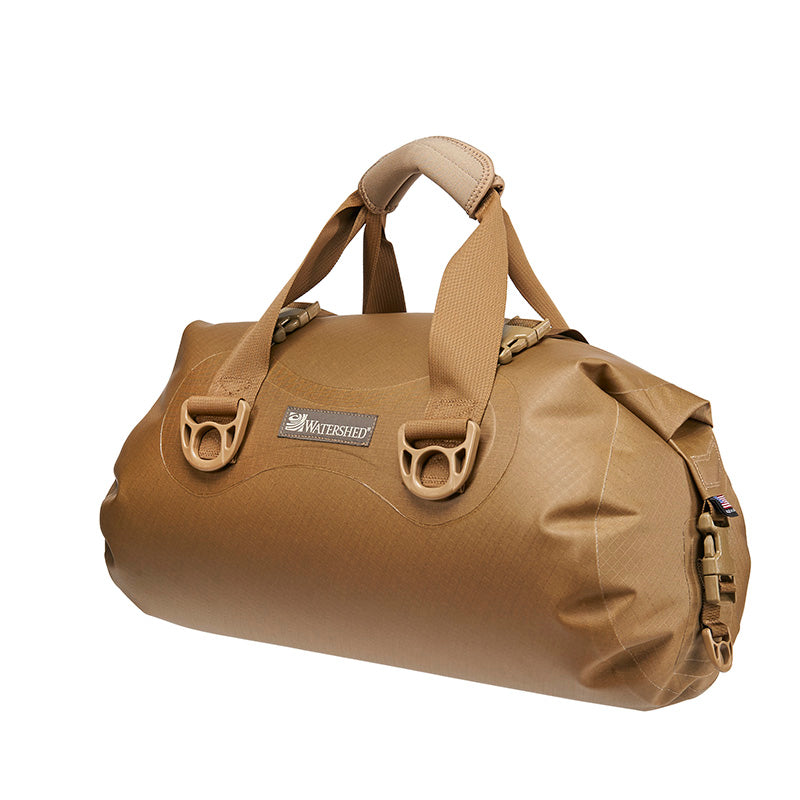
It can, when you pack in dry bags or other bags meant to keep water out. Roll-top dry bags are a common choice; the Explorer Dry Bag uses a 3-roll top close and RF-welded seams. We are not quoting waterproof ratings here, because those vary by bag. Hard boxes are not automatically the drier option either — they often are not waterproof, and a dented lid can lose its seal.
Many riders believe hard luggage can cause injury in a tip-over or crash because a rigid box doesn’t flex when it lands on a leg or ankle. Soft bags give a better chance of avoiding that kind of injury for the same tip-over. It’s why a lot of dual-sport and adventure riders pick soft luggage for technical dirt. Hard panniers still make sense for pavement-heavy touring and when you want lockable cases. Pick for how you ride.
There's a learning curve at first. Your soft rack and straps are separate from your bags, so you set them up once to fit your bike, and after that they work with any bag you own. It's normal to play with it a bit the first time. Once it's dialed in, it goes on fast, and most riders love it once they try it. Our install guides and videos walk you through it. If you get stuck, email photos of your bike to Info@GreenChileADV.com and we'll help you rig it.
It depends on the back of the bike, not just the badge on the tank. A stock, narrow dirt-bike fender usually calls for the Hardcore Soft Rack. An aftermarket rack that adds width and rear mount points (and is braced to the frame) makes the GCAG Uprising Soft Rack Kit workable. The Scramble Rack is the minimalist option for carrying bags on the sides; it comes in Enduro (fender hooks), Street (girth hitch), and Dual Sport (girth hitch plus fender strap) versions. We do not duplicate the full bike-by-bike table here — use the Motorcycle Luggage Fitment Guide by Bike. If your bike is not listed, email photos of the seat area (top, both sides, and underneath) to Info@GreenChileADV.com.
If you are going the soft path, pick a rack from the fitment guide, then add straps or a bundle:
If you already have hard panniers, start with the Chile Tech Pannier Bundle.
Turn the bags you already own into real motorcycle luggage. GCAG's modular soft racks and straps fit everything from enduro bikes to big ADV bikes, and they're made in the USA by the riders who invented the soft rack.